Automated Image Classification System for Wildlife Census
Transforming Wildlife Census with AI-Powered Image Classification
Problem Statement
Traditional methods of wildlife census heavily rely on manual analysis of forest imagery, leading to inefficiencies, delays, and susceptibility to human error. This impacts the accuracy of population statistics and delays conservation actions. A scalable, automated system is essential to handle the high volume of data and provide reliable insights into wildlife health and safety.
Our Solution
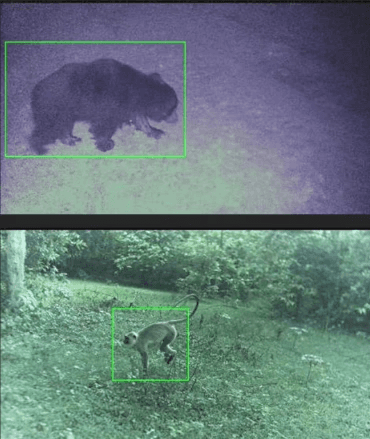
We developed an AI-driven image classification system that automates the identification and categorization of animal species from forest imagery. This solution leverages deep learning to process vast data volumes, improve accuracy, and streamline the wildlife census process.
Real-Time Processing Pipelines
With real-time processing capabilities, the system can handle over 10,000 images daily from camera traps and drones. This drastically reduces the time required for image analysis.
Customizable Taxonomy Models
Our AI models are tailored to recognize the unique biodiversity of the Karnataka forests, with the flexibility to dynamically add new species for classification as new data becomes available.
Data Integration and Visualization Tools
Processed data is integrated with existing wildlife databases to track population trends, migration patterns, and habitat usage. An intuitive dashboard provides forest officials with easy access to insights and reporting tools.
Klyra's Impact
The automated image classification system revolutionized wildlife census operations by drastically reducing manual analysis time and improving the accuracy of species identification. With an 80% reduction in manual sorting efforts and a 95% identification accuracy rate, the project provided actionable insights for over 50 species across five wildlife reserves. These enhancements strengthened conservation efforts, supporting targeted strategies to preserve Karnataka’s rich biodiversity.